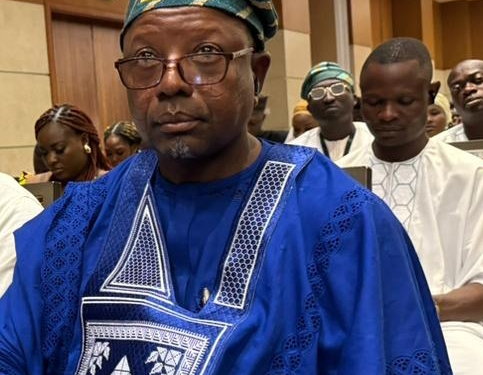
In a recent conversation with the Special Adviser to the President on Economic Matters, Dr. Tope Fasua, Engr. Bola Babarinde shared a series of reflections that cut across Nigeria’s economy, governance culture, and regional competitiveness. His insights were shaped by his participation in the Renewed Hope Global Conference Diaspora Engagement, an initiative focused on sustaining reforms and ensuring Nigerians experience the full dividends of democracy since the country’s return to civilian rule in 1999.
At the center of his remarks is an ambitious proposal he intends to present to President Bola Ahmed Tinubu a homegrown strategy aimed at creating 20 million jobs within 24 months. While the details remain undisclosed, the scale of the plan signals a bold attempt to confront Nigeria’s unemployment crisis. If implemented, the initiative could stimulate growth across agriculture, manufacturing, digital services, and infrastructure sectors widely recognized as engines of inclusive development.
Building on the momentum from the Cotonou engagement, Engr. Babarinde expressed optimism about the upcoming edition scheduled for Pretoria, South Africa. He highlighted the country’s strong economic base, particularly in mining, agriculture, and energy and noted that hosting the event in Pretoria, where he resides, increases the likelihood of participation from senior government officials. Such engagement, he said, could deepen bilateral cooperation and open new opportunities for investment and knowledge exchange.
Beyond economic issues, Engr. Babarinde raised concerns about civic responsibility and the effectiveness of public institutions. He pointed to the National Orientation Agency’s limited impact in promoting empathy, lawful behavior, and respect for traffic regulations. Issues such as road rage, traffic violations, and the conduct of commercial transport operators were highlighted as symptoms of a broader societal challenge requiring urgent attention.
Featured Pull‑Quote:
“Reform cannot remain a political catchphrase; it must be treated as a national duty. Nigeria’s progress depends on the humility to learn, the discipline to enforce standards, and the courage to embrace real change.”
– Engr. Bola Babarinde
Reflecting on his journey between Cotonou and Lagos, Engr. Babarinde noted a striking contrast in environmental cleanliness, orderliness, and security procedures. He observed that the Republic of Benin maintains a streamlined system with minimal checkpoints, while the Nigerian side particularly the stretch from Seme border through Badagry to Agbara is marked by numerous checkpoints and instances of extortion by some law enforcement officers.
He argued that such practices discourage tourism and damage Nigeria’s international image, despite the presence of more professional agencies like the National Drug Law Enforcement Agency.
On infrastructure, he described the road conditions between Badagry and the Seme border as hazardous and in need of urgent attention. While acknowledging improvements along the Agbara–Badagry corridor, he stressed the need to extend similar development to border communities to enhance safety, trade, and regional integration.
He also highlighted urban management challenges in Lagos, including the increasing presence of wheelbarrows and locally fabricated trucks (“Bolla”) on major highways, even at night. He expressed concern about the normalization of one‑way driving and called for stronger enforcement by relevant authorities.
A recurring theme in his reflections was the importance of learning from other African countries. He echoed Dr. Fasua’s view that Nigeria’s size should not prevent it from adopting best practices from smaller nations. Using the Republic of Benin as an example, he noted that orderliness, respect for public systems, and effective governance are achievable and Nigeria must be willing to learn, adapt, and improve.
Engr. Bola Babarinde’s observations present both critique and hope. They highlight the need for economic innovation, stronger institutions, improved infrastructure, and a renewed commitment to civic responsibility as Nigeria continues its development journey.