


Written by Omolabake O. Daranijo-Flyby Hub
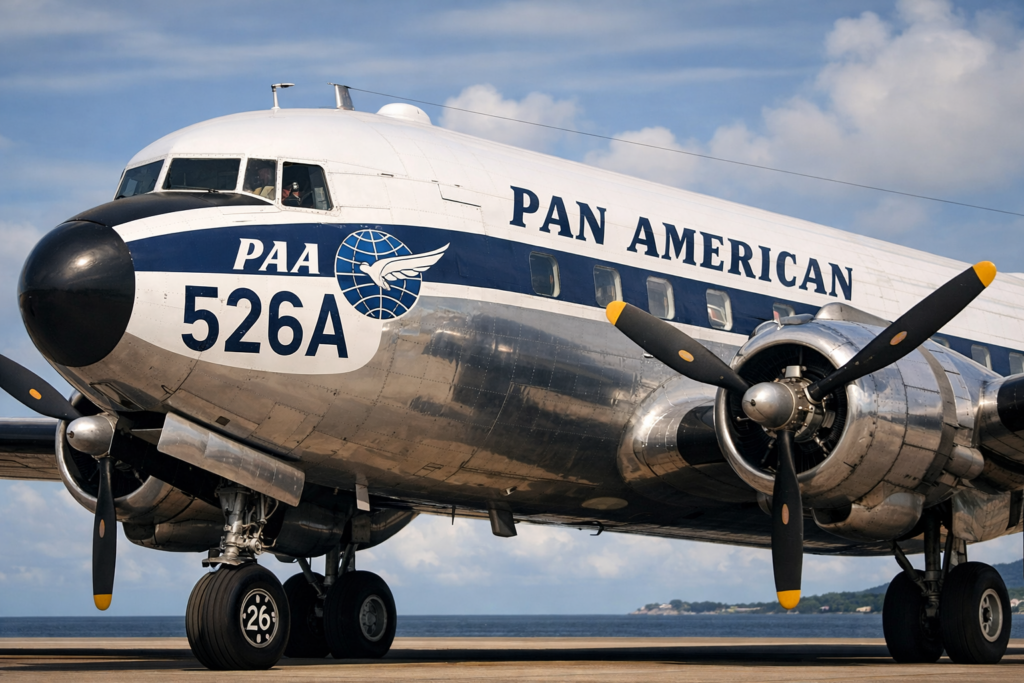
The 74‑year mystery of Pan American Flight 526A finally breaks open as deep‑sea drones uncover the wreckage long claimed by the Atlantic. A story of loss, survival, and the quiet persistence of technology, told through the eyes of a living witness.
San Juan, Puerto Rico-July 2026
For seventy‑four years, the Atlantic guarded a secret.
Pan American World Airways Flight 526A, lifted off from San Juan on a warm morning in 1952, carrying 69 souls toward New York. Ten minutes later, the aircraft vanished from the sky. It struck the ocean with such force that it sank in less than four minutes. Fifty‑two passengers and crew were lost. Seventeen survived, pulled from the water in shock, clinging to fragments of a world that had just broken apart.
And then the sea closed over everything.
Decades passed. Families mourned without answers. The wreckage remained unfound, unreachable, and unspoken, a story suspended between memory and myth.
Until now.
Technology Meets the Deep
This week, a Deep-Sea Exploration Team deployed a fleet of advanced underwater drones across a stretch of ocean long considered impossible to search. These machines, built for extreme depths, moved with quiet precision through darkness where human divers could never go.
Hours into the mission, one drone captured a metallic, fractured, unmistakably the remains of an aircraft. The wreckage of Flight 526A’s had finally been found.
The discovery is not just a triumph of engineering. It is a reminder that technology, when used with intention, can illuminate the past as powerfully as it shapes the future.
A Survivor Who Lived Long Enough to Witness the Truth
Among the original survivors was a young nurse, 46 at the time of the crash. Today, she is 120 years old, one of the oldest living witnesses to an aviation disaster.
When told of the discovery, she reportedly said only, “The ocean kept it safe.”
Her story was one of improbable endurance. She was thrown clear of the aircraft as it broke apart, surviving the impact and the cold, clinging to debris until rescue boats arrived. For decades, she carried memories of terror, silence, and the sudden stillness that followed.
Now she carries something else: closure.
Why This Discovery Matters
The wreckage may offer clues long lost to structural failures, environmental conditions, or mechanical issues that shaped early aviation history. Investigators hope the remains will help complete a narrative that has lived in fragments for generations.
For the Deep-Sea Exploration Team, this mission marks a milestone. What once required massive ships, dangerous dives, and years of searching can now be achieved with robotics that map the ocean floor with near‑perfect accuracy.
The Ocean as Archive
Technology often pushes us forward, but moments like this remind us of its power to reach back, to recover what was lost, to honor what was forgotten, to give shape to stories swallowed by time.
Flight 526A’s discovery is more than a headline. It is a restoration.
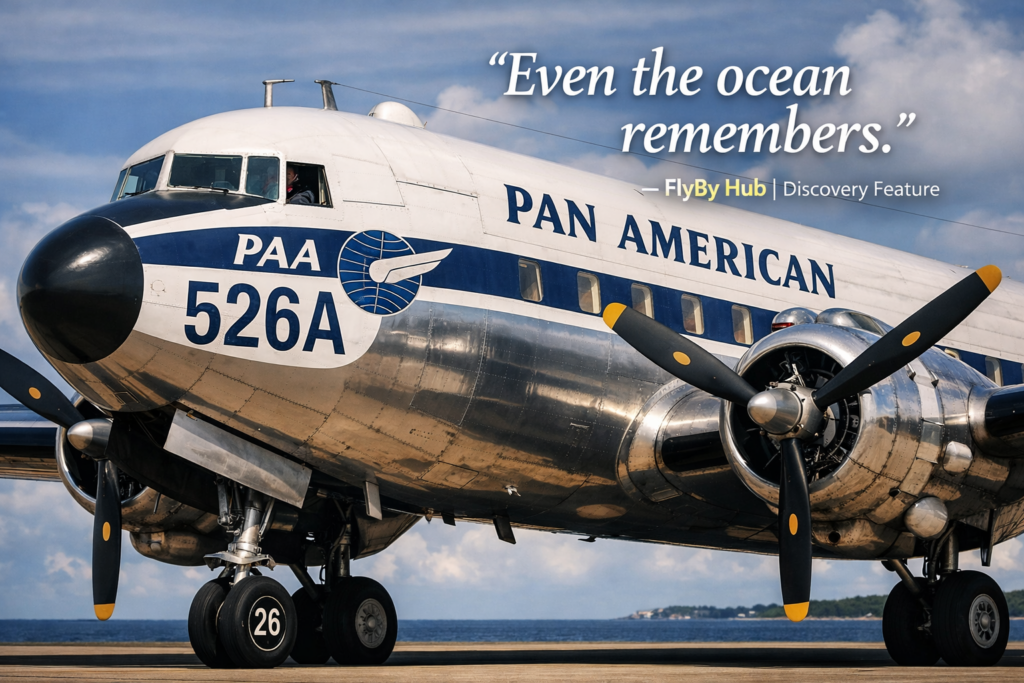
Even the ocean remembers.
And now, because of human persistence and modern innovation, so do we.









1 Comment
Excellent job Ma’am