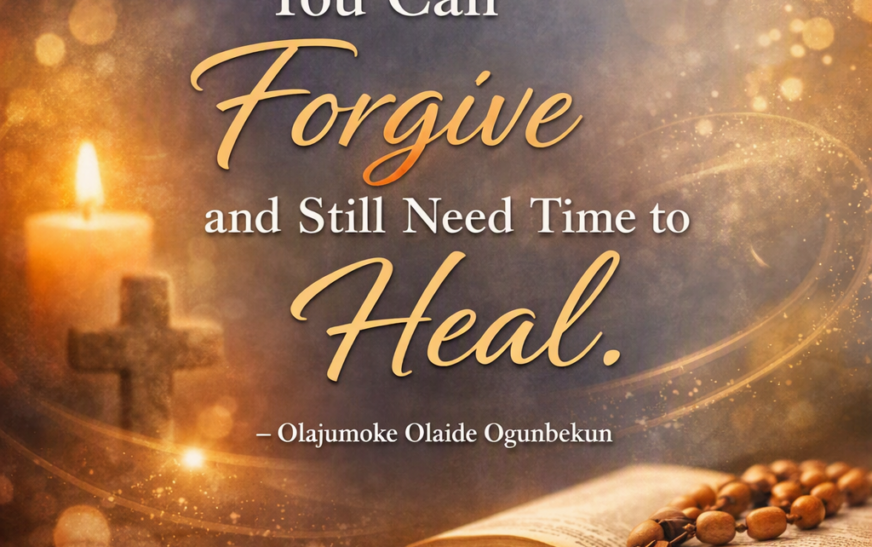
By Olajumoke Olaide Ogunbekun- FlyBy Hub Contributor

Forgiveness is often spoken about as if it is a switch, something you turn on and instantly feel whole again. But emotional reality is far more complex. As Olajumoke writes, “Forgiving someone does not mean the pain disappears immediately.”
This truth sits at the heart of her message: forgiveness and healing are connected, but they are not the same journey.
Many people are told to “let it go,” “move on,” or “stop thinking about it,” yet the human heart does not heal on command. You can forgive someone and still feel hurt. You can forgive and still remember. You can forgive and still need time before trust feels safe again. That does not make your forgiveness fake, it makes you human.
Forgiveness Does Not Erase Reality
One of the most powerful insights in her writing is the reminder that forgiveness does not rewrite history. An apology may be sincere, but the wound may still be fresh. Olajumoke illustrates this with a simple metaphor: if someone breaks a glass and apologizes, the apology matters but the glass is still broken.
Trust, she explains, is rebuilt through consistent behavior over time. Forgiveness can be given in a moment; healing requires patience, safety, and evidence of change.
You Are Allowed to Heal Slowly
People often rush the wounded because they are uncomfortable with pain. They want the tears to stop, the subject closed, the relationship restored. But healing cannot be forced simply because others are ready to move on.
Olajumoke encourages readers to honor their truth:
“This hurt me.”
You do not have to minimize your experience to make someone else comfortable. Healing begins in the middle ground, not denial, not obsession, but honest processing.
A Practical Pathway to Emotional Healing
Her work offers a deeply structured and compassionate roadmap for recovery:
1. Acknowledge What Happened
Honestly, name the wound. Sometimes the event hurts, but sometimes what hurts more is what the event made you believe about yourself.
2. Allow Yourself to Grieve
Grief is not only for death. You can grieve trust, expectations, years lost, or the version of yourself that existed before the pain.
3. Separate Forgiveness from Trust
Forgiveness is given; trust is earned. Evidence matters more than promises.
4. Establish Healthy Boundaries
Boundaries are not punishment, they are protection.
5. Stop Punishing Yourself
Self‑blame keeps wounds open. Someone else’s choices do not define your worth.
6. Choose Safe People

Not everyone is emotionally mature enough to hold your pain with care.
7. Care for Your Body
Emotional pain affects sleep, appetite, energy, and physical wellbeing.
8. Avoid Decisions Made from Hurt
Where there is no danger, give yourself space before making major choices.
9. Rebuild Yourself
Healing is not only about repairing relationships, but it is about rediscovering who you are becoming.
10. Give Yourself Time
Healing has no universal timetable. Progress is often quiet and gradual.
If You Are the One Who Caused Hurt
Olajumoke speaks directly to those seeking forgiveness: do not demand instant trust. Do not weaponize someone’s forgiveness. Instead, let changed behavior speak. Ask, “What can I do consistently to help rebuild the trust I damaged?”
Responsibility is not a statement; it is a lifestyle.
Faith and the Healing Journey
Her writing brings a deeply Christian perspective without dismissing emotional reality. She reminds readers that faith does not require pretending. “You can pray and still cry. You can trust God and still need counselling.”
Healing can come through prayer, Scripture, wise relationships, pastoral care, and professional therapy. Seeking help is not a failure of faith, it is often an expression of it.
Forgiveness Is Not the Final Chapter
Forgiveness may be the beginning of a deeper journey. You forgive. Then you grieve. Your process. You learn. You rebuild. You breathe again.
The goal is not to forget what happened.
The goal is to reach a place where what happened no longer controls your identity, your choices, or your future.
And in her closing words, the most tender reminder of all, Olajumoke writes:
“You have forgiven. Now give yourself permission to heal.”